Mgs-ians who are dedicated to save the environment

Carbon Footprint: What will happen in future if we do nothing?

Climate model simulations predict an increase in average surface air temperature of about 2.5°C by the year 2100 (Kattenberg et al., 1996).
The likelihood of "killer" heat waves during the warm season will increase (Karl et al., 1997)
The IPCC Second Assessment Report estimates that sea-levels will rise by approximately 49 cm over the next 100 years, with a range of uncertainty of 20-86 cm.
Sea-level rise will lead to increased coastal flooding through direct inundation and an increase in the base for storm surges, allowing flooding of larger areas and higher elevations.


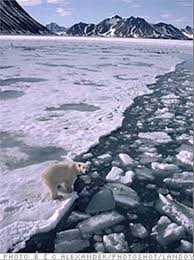
Further melting of the Arctic Ice Caps (at the current rate) could be sufficient to turn off the ocean currents that drive the Gulf Stream, which keeps Britain up to 6°C warmer than it would otherwise be.



What can I do?

You have to go to work and we all like being consumers - but there are many ways you can help. Firstly, you need to recognise how you personally impact global warming. Carbon Footprint will show you how to minimise your impact - starting today - and show you how to make the right product choices in the future.

Carbon Footprint: Global Warming

Global warming is the name given by scientists for the gradual increase in temperature of the Earth's surface that has worsened since the industrial revolution.

Over the past two decades the effect has become more marked. Considerable evidence exists that most of this warming has been caused by human activities... that's to say we have altered the chemical composition of the atmosphere through a buildup of greenhouse gases – primarily carbon dioxide, methane, and nitrous oxide.


What if we do nothing? Rising global temperatures will cause sea level to rise and alter local climate conditions, affecting forests, crop yields, and water supplies. It may also affect human health, animals, and many types of ecosystems. Deserts may expand and some of our countryside may be permanently altered.

How to reduce carbon footprint?


Individuals and businesses produce carbon dioxide from daily activities such as driving, heating, and the consumption of products and services. To reduce the effects of carbon footprint, we can reduce our carbon output by going on a carbon diet. A carbon diet refers to reducing the impact on climate change by reducing greenhouse gas production. The carbon footprint can be efficiently and effectively reduced by Life Cycle Assessment. Life Cycle Assessment is to accurately determine the current carbon footprint. Identification of hot-spots in terms of energy consumption and associated carbon dioxide emissions also can reduce carbon footprint. Identification of solutions
to neutralize the carbon dioxide emissions that cannot be eliminated by energy saving measures also helps in reducing carbon footprint. This last step includes carbon offsetting investments carbon dioxide emissions for instance tree planting.

by Joe Shuan

Carbon footprint: effects

Global warming is caused by the emission of greenhouse gases.

72% of the emitted greenhouse gases is made up of carbon dioxide (CO2).
Carbon dioxide emissions therefore are the main cause of global warming.

CO2 is caused by burning fuels.
Oil, natural gas, diesel, organic-diesel, petrol, organic-petrol, ethanol.

Emissions of CO2 have been increasing at a rate of approximately 3% yearly for the past 50 years.
It is released to the atmosphere where it remains for 100 to 200 years.

A warming of 2ºC corresponds to an amount of 250 parts per million (ppm) carbon dioxide concentration in d environment.
As of 2007, CO2 concentration is already 380ppm.
This value raises at an average of 2-3ppm per year.
Thus the predicted critical value will be reached in approximately 20 to 30 years.

by Shu Yoong

Carbon Footprint: What are greenhouse gases?

Carbon footprint = the amount of greenhouse gases produced by human activities and is measured in the amount of CO2 produced.

What are greenhouse gases?
Greenhouse gas is any gas that traps heat in the atmosphere through the greenhouse effect.

Here are some examples:
1) CO2: through the burning of fossil fuels such as oil, natural gas, coal), the burning of solid waste, trees and wood products, and also
it is the result of other chemical reactions (e.g., manufacture of cement).

2) Methane: emitted during the production & transport of coal, natural gas and oil. It is also a result from livestock and other agricultural practices, and by the decay of organic waste in municipal solid waste landfills.

3) Nitrous Oxide: emitted during agricultural and industrial activities, as well as during combustion of fossil fuels and solid waste

4) Fluorinated Gases: they are powerful greenhouse gases that are emitted from a variety of industrial processes (e.g. Chlorofluorocarbon)

All these greenhouse gases mentioned above are produced from human activities. As carbon footprint is the measure of the amount of greenhouse gases produced in CO2, therefore human activities are the cause of our large carbon footprint.

Main activities that will increase our carbon footprint:
a) use of transportation (planes, cars, trains)
b) burning of fossil fuels (petrol, coal)
c) process of manufacturing products (clothing, food, personal products)
d) use of household electricity (computers, lights)
e) use of pesticides
f) heating and cooling – hot water showers, central heating, air conditioning

by Yvonne Lee

What is a Carbon Footprint?

A carbon footprint is a measure of the impact our activities have on the environment, and in particular climate change. It relates to the amount of greenhouse gases produced in our day-to-day lives through burning fossil fuels for electricity, heating and transportation etc.


A carbon footprint is usually expressed in equivalent tonnes of carbon dioxide. In other words, when you drive a car, the engines burns fuel which creates a certain amount of carbon dioxide gas, depending on its fuel consumption and driving distance.


A carbon footprint is made up of the sum of two parts, which are the primary footprint and the secondary footprint. The primary footprint is a measure of our direct emissions of carbon dioxide from the burning of fossil fuels including domestic energy consumption and transportation. For example, car and plane. The secondary footprint is a measure of the indirect carbon dioxide emissions from the whole lifecycle of the products we use. Products with more packaging will generally have a larger secondary footprint than products with a minimal amount of packaging. To put it very simply, the more we buy, the more emissions will be caused on our behalf.


References :

www.timeforchange.org

www.carbonfootprint.com

by PQin Chuah

Papaya Enzymes

Made a batch of papaya enzymes today. Slice half a papaya into small pieces. Put one layer in a clean glass bottle, add a layer of lemon slices, and another layer of papaya. Top this with rock sugar. You can also use honey if you can't find rock sugar.

Tomato Enzymes


Found some really nice red tomatoes today. Someone requested for the proportion of ingredients to make tomato enzymes. Here's the recipe again:
5 big tomatoes, sliced
1 lemon, peeled, sliced thinly
Layer the tomatoes and lemon slices.
Add 3 tablespoons of honey on top. Alternatively, you can use brown rock sugar or candy slices.

Chinese New Year orange skin leftovers


These leftover oranges from Chinese New Year are great for making enzymes.
Last year's enzymes made from orange peels smell great and are very useful.
Pn Ng GH's husband uses a few drops to wash his car. Adding some enzymes helps remove dirt and grime easily.
The rest of us in MGS use the enzymes we have made to mop floors and clean dishes.
When I add a few drops of orange enzymes to the detergent, it helps remove oil and grease much easily. In the long run, I use less detergent.
So I encourage all of you to make enzymes and for those of you who are still making them, keep up the good work. 

Anyway, this is the basic recipe on how to make enzymes:

Follow the ratio of

Water: fruit peel: Molasses(brown sugar)
10       :              3          :             1

Ferment in an airtight bottle, opening daily to release the gas produced.
After three months, your enzymes are ready to be used!

Enzyme residue


Residue from making eco/garbage enzymes can be used as fertilizers. The girls are getting the residue out from the bottle. It's not so easy. Takes a shorter time to stuff the peels into the bottles to make enzymes than to get them out. Imagine getting watermelon skin and lemon peels out from the narrow bottle opening. It's kind of yukky looking too but these three girls faithfully help Pn Looi do this job. They usually bury the enzyme pulp.


Pineapple Enzymes


This is one of our favorites.

Recipe:
2 pineapples sliced thinly
1 lemon peeled, sliced thinly
1 pack of rock sugar

Recipe for Tomato Enzyme

Tomatoes contain a high level of lycopene. Lycopene is supposed to be very effective in fighting and preventing cancer, particularly prostate disorders. It has also been reported to reduce risk of heart disease.

Ingredients: Tomatoes or cherry tomatoes
lemons
honey

Method:
1. Rinse, dry, slice tomatoes.
2. Peel, slice lemons thinly.
3. Divide ingredients into 3 portions. Stack ingredients in sequence: tomatoes, lemons, honey into a glass jar. Repeat the process with the remaining 2 portions.
4. Seal tight with food wrap after the 3 portions are completely stacked in. Cover with lid. Keep in cool dry place for 1 week before serving.

This information is taken from one of the enzyme books in an earlier post and notes from an enzyme seminar that Pn Ng attended.

How to prevent mould

Select only fresh fruits or vegetables. Remove ragged surfaces. The glass containers must be sealed tight with food wrap and covered with a lid after all ingredients are stacked-in. This will prevent pathogen or spores from contaminating the contents. Semi-dried surface will easily get mouldy. Shake the container slightly every one or two days to moisten the ingredients. Use a dry spoon to mix or scoop the contents if you need to do so. During fermentation, avoid storing containers in damp, stuffy places.

Mouldy?

Sometimes we find some white stuff on the surface of the enzymes during fermentation.
It's a layer of bio-film, an occurrence of bacteria activity that forms during fermentation. This is quite harmless. According to Dr Joean, it's the kind of stuff found in SK-II!

Preparation for making fruit drink enzyme

Good hygiene is absolutely required in preparation of fruit drink enzyme. Use clean disposable gloves to handle all food ingredients. Glass containers, cutting board and knife must be thoroughly cleaned, sterilized and dried. Sun dried preferably. Books have cautioned against using a hairdryer to blow dry as it may contaminate the containers and utensils.

Books on enzymes part 2

Here is another book about vegetable and fruit enzymes. It is available in the market. We're putting in some excerpts from these recommended books soon.

Books on enzymes


We are introducing a few enzyme recipe books which can be found in the shops. Many of them are in Mandarin but we have found a few books which are bilingual for us "bananas" (yellow on the outside and white on the inside) from MGS :)


Technique of storing enzyme

Place enzyme in cold storage to keep it fresh. A bottle of enzyme should be consumed within 1 month.

Fermentation period

2 weeks.

Technique of consuming enzyme:

o   Hold about 30ml of enzyme under the tongue and swallow it slowly. This will stimulate the nerves and promote blood circulation.

     o   Consume enzyme 1 hour before or after meals.

Those who have stomach problems are advised to consume it after meals or mix enzyme with water will reduce its effectiveness.